
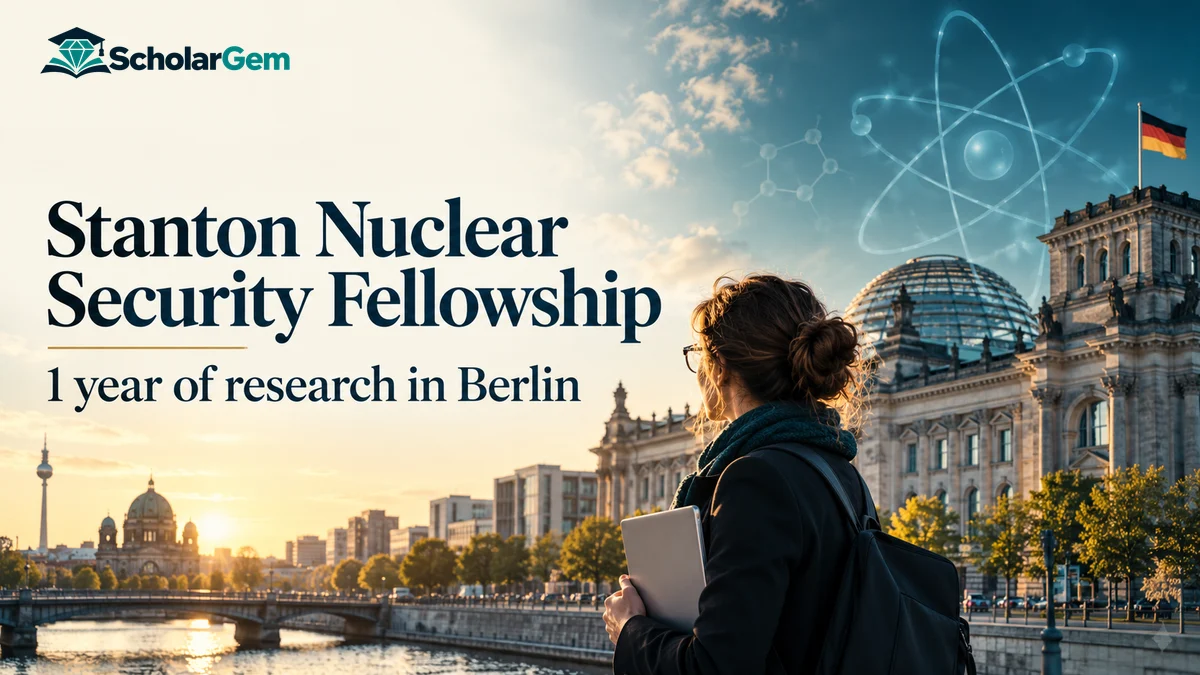
The Stanton Nuclear Security Fellowship supports independent research at the Hertie School in Berlin. The current call is for the 2027/28 academic year. Its live application deadline is 30 November 2026.
Fellows spend a year researching nuclear security, with particular attention to the European theatre. The call welcomes postdoctoral researchers and eligible junior faculty. Applicants should develop a non-US-centric project with a clear policy connection.
Stanton Nuclear Security Fellowship details
The fellowship is based at Hertie’s Centre for International Security and funded by the Stanton Foundation. Fellows undertake a year-long period of independent research beginning in September.
Relevant subjects include nuclear proliferation, terrorism, weapons and force posture, as well as nuclear energy where it relates to security. Projects must address non-US-centric questions rather than treating any energy topic as automatically eligible.
Host | Hertie School, Centre for International Security |
|---|---|
Location | Berlin, Germany |
Duration | 1 year, beginning in September |
Applicants | Postdoctoral researchers and tenure-track junior faculty |
Awards | Up to 2 annually |
Deadline | 30 November 2026 |
Stay Updated with Scholar Gem
Follow ScholarGem for scholarship and career updates. Confirm application terms with the official provider.
Stanton Nuclear Security Fellowship benefits
The current official call quotes US$110,000 for postdoctoral researchers and US$130,000 for junior faculty. Payment is in euros using the fixed conversion rate stated by Hertie for 5 November 2026.
Do not treat these as already confirmed euro amounts or convert them using a personal exchange-rate estimate. The programme page says up to two fellowships are awarded annually, so eligibility does not guarantee selection.
For other research and professional-development formats, compare the DAAD Heilbronn AI Fellowship and Fisher Family Summer Fellows Program. The Knight-Wallace Fellowship is specifically relevant to journalism applicants.
Eligibility
Postdoctoral researchers and tenure-track junior faculty can apply. Junior faculty at law schools, or those whose terminal qualification is a law degree, are also eligible under the call.
Relevant experience can come from nuclear policy, international relations, engineering, physics and related fields. Your proposal should explain the connection between that experience and a concrete nuclear-security research question.
Requirements and documents
Submit a current CV, two recommendation letters, a personal statement and a project proposal. The employer portal limits the statement to 500 words and the proposal to 1,500 words.
The statement should connect long-term career goals to the fellowship. The proposal should cover the topic, methodology, possible findings and policy recommendations; official transcripts may also be requested.
How to apply for Stanton Nuclear Security Fellowship
Apply through the employer portal linked from the Hertie programme page. The call does not accept applications through other submission methods, although recommenders may send letters directly by email.
Check the word limits before uploading and ensure your proposal is centred on the requested geographical and policy scope. Questions can be directed to the programme contact listed on the official call.
Application deadline
Both the current programme page and live employer listing give 30 November 2026 for the 2027/28 call. Neither states a closing hour or timezone.
Older search results showing a January deadline should not guide this application. Use the live linked call and check it again before submission for any further changes.
Frequently asked questions
Where is the fellowship based? At the Hertie School’s Centre for International Security in Berlin, Germany. Fellows conduct independent research for one year.
Can engineers or physicists apply? Yes, relevant experience is broadly defined. Applicants still need to meet the postdoctoral or junior-faculty eligibility conditions.
What should the research address?
Non-US-centric nuclear-security questions, particularly those relevant to Europe. The proposal must explain its methods and potential policy contribution.
What are the word limits?
The live employer portal specifies no more than 500 words for the personal statement and 1,500 for the project proposal.
Is the stipend quoted in euros?
The live call quotes US dollar amounts but says payment will be in euros using its specified fixed conversion rate. Do not assume the quoted dollar figure is the euro payment.
Is the deadline in January?
The current programme and employer pages give 30 November 2026. Older January wording in search results is superseded by the live call.
Conclusion
The Stanton Nuclear Security Fellowship gives eligible researchers a year at Hertie to pursue a defined policy-relevant project. A focused non-US-centric proposal and well-supported career statement are central application materials.
Use the current 30 November 2026 deadline and the official employer portal. Confirm the payment terms directly with Hertie before using the headline dollar figures in a personal budget.