

The Cleantech Challenge accepts student-led ideas for practical environmental problems. Applicants can enter with a team or seek teammates through the organisers. Individual applications close on 30 November 2026.
Teams must submit their first-stage idea by 15 January 2027 at 23:59 GMT. At least half of each team must be students, and all members must be 18 or older. A short written entry is the first step for teams.
Cleantech Challenge details
The Cleantech Challenge looks for technology ideas with a positive environmental effect and a plausible path to use. The first stage asks teams to describe the problem, the solution and the market. Judges look at feasibility, scalability, costs and the advantage over existing options.
You can start the individual route with or without your own idea. Organisers plan to enable contact between individual applicants on 7 December so they can form teams. Once a group is complete it follows the regular team application procedure.
Opportunity | Student cleantech competition |
|---|---|
Entry routes | Individual matching or pre-formed team |
Student share | At least 50% of team members |
Minimum age | 18 for all members |
Finals | Two-day bootcamp in April 2027 |
Deadline | Individuals 30 November 2026. Teams 15 January 2027 at 23:59 GMT. |
Stay Updated with Scholar Gem
Follow Scholar Gem for verified scholarship, fellowship, and education updates.
Always recheck the official source before submitting an application.
Cleantech Challenge benefits
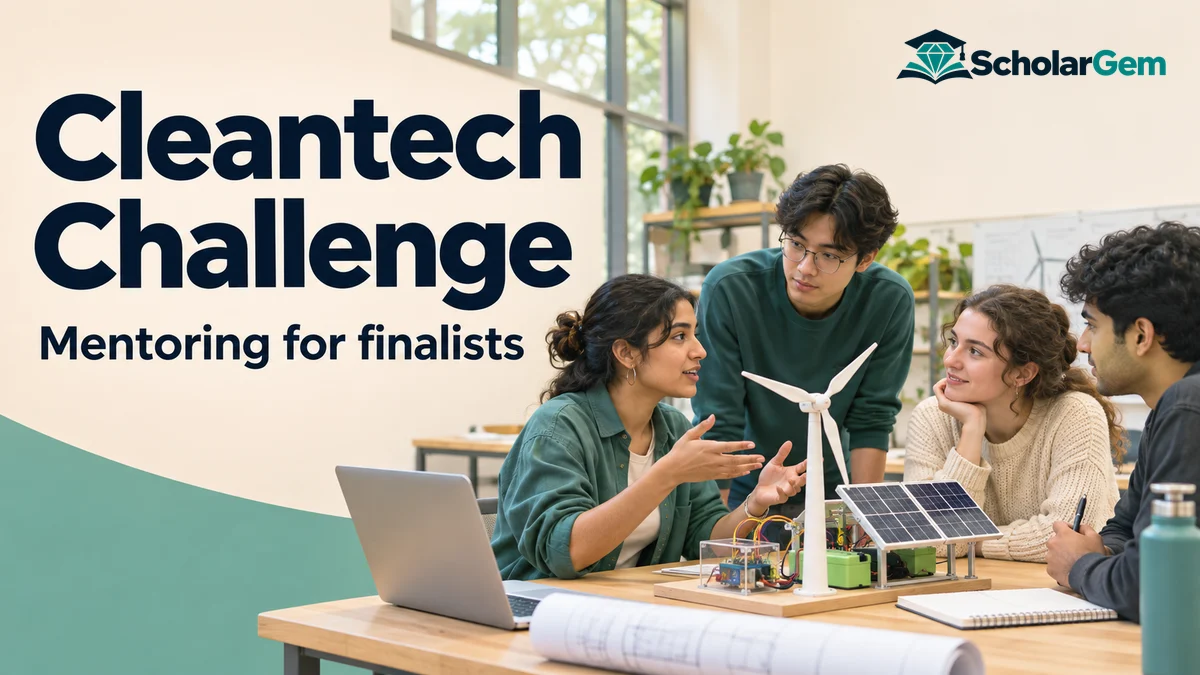
The organisers offer mentoring at the finals and pitch practice during the bootcamp. That gives teams a chance to test their assumptions with people who know cleantech markets. Shortlisted teams should check their ability to attend both days.
The judging panel awards prizes at its discretion. Reaching the next stage gives a team the opportunity to refine its idea and present it to specialists, including investors and entrepreneurs. The written entry and pitch are judged at different stages. Compare Green Climate Fund Internship, Max Planck Climate Risks PhD and World Bank Government Analytics Fellowship.
Eligibility
At least half the team must be students registered in full-time degree programmes. Undergraduate, master’s, MBA and doctoral programmes qualify under the published rules. The rules allow students who are enrolled in January 2027 to participate if they graduate before the April finals.
All team members must be at least 18. The organisers accept different academic backgrounds and encourage teams to combine technical and business skills. Review the current rules about prior funding and venture stage before submitting.
Application materials
Stage one asks for answers about the idea and the résumés of team members. Explain why the solution could reduce the problem you identified. Use the word limit to focus on technical feasibility and who would use the product.
Teams invited to stage two submit a pitch deck of no more than ten slides. The organisers want a clear account of what a venture would need to test or launch. Read the official stage guidance before deciding what to put in the deck.
How to apply for the Cleantech Challenge
Select the application route that matches your situation. Individuals seeking teammates should use the individual form and watch for the December matching step. Existing teams can prepare the stage-one entry immediately. Read the official instructions before opening the form.
Review the membership requirements before filing the team entry. Check the team’s availability for the final bootcamp and keep a copy of the submission. If selected, use the organiser’s stage-two instructions for the presentation format.
Application deadline
Applications from individuals looking for teammates close on 30 November 2026. The first-stage team deadline is 15 January 2027 at 23:59 GMT.
Invited teams submit stage two by 12 February 2027 at 23:59 GMT. That is a subsequent competition deadline for shortlisted applicants. Plan around the entry deadline for your route.
Frequently asked questions
Can I enter the Cleantech Challenge without a team?
Yes. Individuals can use the team-matching route whether or not they already have an idea. The individual deadline is 30 November 2026. The organisers plan to open contact between individual applicants on 7 December so they can assemble teams.
How many team members need to be students?
At least half of the team must be enrolled in full-time degree programmes under the published rules. The rules cover undergraduate, master’s, MBA and doctoral students. All members must be 18 or older, and applicants should review the enrolment condition for January 2027.
What does a team submit in stage one?
A team submits a short written entry about its clean technology idea and résumés for its members. The judging guidance asks teams to consider environmental impact, technical feasibility and the potential market. The first-stage deadline is 15 January 2027 at 23:59 GMT.
Do shortlisted teams submit a pitch deck?
Yes. Teams invited to stage two prepare a deck of up to ten slides following the organiser’s guidance. The submission deadline for that stage is 12 February 2027 at 23:59 GMT. The second stage applies only after a team advances from the first stage.
Are there academic subject requirements?
The rules do not require a specific academic background. The organisers encourage teams to bring complementary business and technical skills. Team composition still has to meet the full-time student and age requirements, and the venture must meet the applicable competition rules.
When do finalists need to be available?
Finalists should reserve both bootcamp days, 27 and 28 April 2027, as listed in the competition rules. Activities include seminars, time with mentors and final presentations. Read the current organiser guidance for any practical details you need before confirming attendance.
Conclusion
The Cleantech Challenge gives student-led teams a route to test a climate technology idea. If you need collaborators, submit the individual form before the team entry deadline approaches.
Once the team is ready, explain the environmental problem and what your idea could change. Check the judging guidance and submit the written entry through the official site.

